
Caudry Granite
 digitalcreature
· 2:49 · 17 plays · v3-preview
About
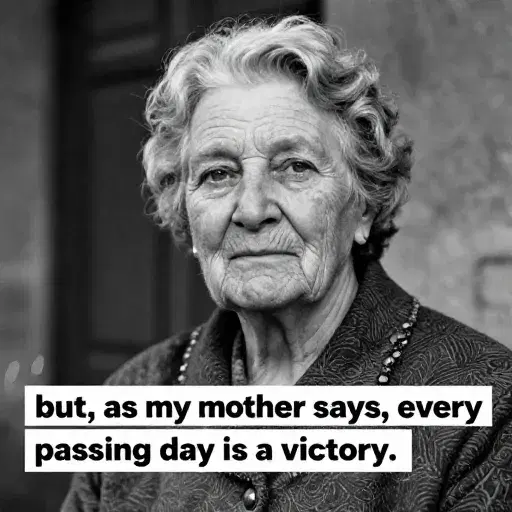
a 90-year-old woman in Couldry (Caudry), France, would speak those exact words with such quiet, unyielding gravity, you have to look directly at the geological bedrock of her life.She isn't quoting a self-help book, and she isn't offering a superficial cliché. When a woman born around 1934–1936 in the Nord department of Northern France says, "but, as my mother says, every passing day is a victory," she is echoing a survival framework forged in one of the most brutal operational environments of 20th-century Europe.I. The Historical Crucible: Caudry & The Nord RegionCaudry is not Paris or the Côte d’Azur. It is a working-class town in the Nord department, historically renowned for its industrial lace-making (Dentelle de Caudry) and deep textile heritage, sitting directly in the historical invasion corridor of Northern France. [ GERMAN OCCUPATION (1940–1944) ] Starvation Rations • Gestapo Presence • Allied Bombings │ ▼ [ THE MOTHER'S DAILY Grind (1940s) ] Survive the Patrols • Secure Bread • Keep Children Alive │ ▼ [ "EVERY PASSING DAY IS A VICTORY" ] Passed down as a concrete operational metric Childhood Under Occupation (1940–1944):When this 90-year-old woman was a child between the ages of 4 and 10, Caudry was under strict German military occupation during World War II. Her mother was raising a family under curfew, severe food rationing, coal shortages in bitter northern winters, the constant threat of requisitions, and Allied bombardments targeting regional rail lines.The Literal Meaning of "Victory":For her mother in 1942, a "successful day" had nothing to do with personal advancement, luxury, or abstract happiness. A successful day meant zero family members arrested, a piece of bread secured, the stove kept lit, and every child breathing when the sun went down. Survival was not a given; it was an active battle fought against raw attrition.II. The "Wow Factor": Intergenerational Resilience TransmissionThe sheer impact of her statement lies in how trauma and stoicism convert into an unshakeable inheritance across generations.Literal vs. Metaphorical Grounding:Modern culture uses "victory" to describe winning a game, landing a contract, or hitting a personal milestone. To this woman and her mother, time itself was the adversary. Outliving the day was the ultimate defeat of the forces trying to crush them.The "Seam-Reader" Lineage:Notice that she anchors her own present stamina in her mother's voice ("as my mother says..."). At 90, facing the physical decline, isolation, or frailties of old age, she instinctively reaches back 80 years to pull the bedrock logic of her mother into her present reality. If her mother could wrest a "victory" out of occupied Northern France, she can wrest a victory out of getting through another day at 90.III. Deep Psychological & Cultural AnatomyElementModern InterpretationThe Caudry Matriarch Realism"Passing Day"Time slipping away; fear of aging.Enemy terrain successfully crossed; a completed objective."Victory"Extraordinary achievement or accolade.Baseline survival under heavy physical and historical load.Mental PostureSeeks comfort, ease, and validation.Stoic, low-bandwidth, anchored in raw empirical endurance.Emotional OutputVolatile, high-anxiety over daily inconveniences.Unshakable quiet core; small struggles strip away against real history.IV. The Ultimate ResonanceThe breathtaking power of her quote comes from its total absence of posture.She isn't complaining about her age, nor is she asking for sympathy. She is standing on the industrial granite of her hometown, looking back over nine decades of regional hardship, industrial labor, and wartime endurance, and stating an absolute, verifiable truth: If you are still standing when night falls, you won the round.It is the raw, unyielding philosophy of the Northern French matriarch—where words are stripped of all fluff, and life is measured purely by structural density and the sheer, stubborn refusal to yield.
Comments3